
Welcome to our Into the Jungle ToolKit - Featuring Scarlet Macaws!
Look to the very tops of the rainforest in Belize, and you might just see a flash of red high up in the trees. This is the scarlet macaw, one of the most beautiful birds in the world. These vibrant parrots are icons of the tropics, and for students especially recognizable and exciting for their common association with pirates. Because they’re so iconic, scarlet macaws can serve as an excellent way to explain big issues like conservation, poaching, and wildlife rehabilitation in ways that are simple and understandable for K-2 levels.
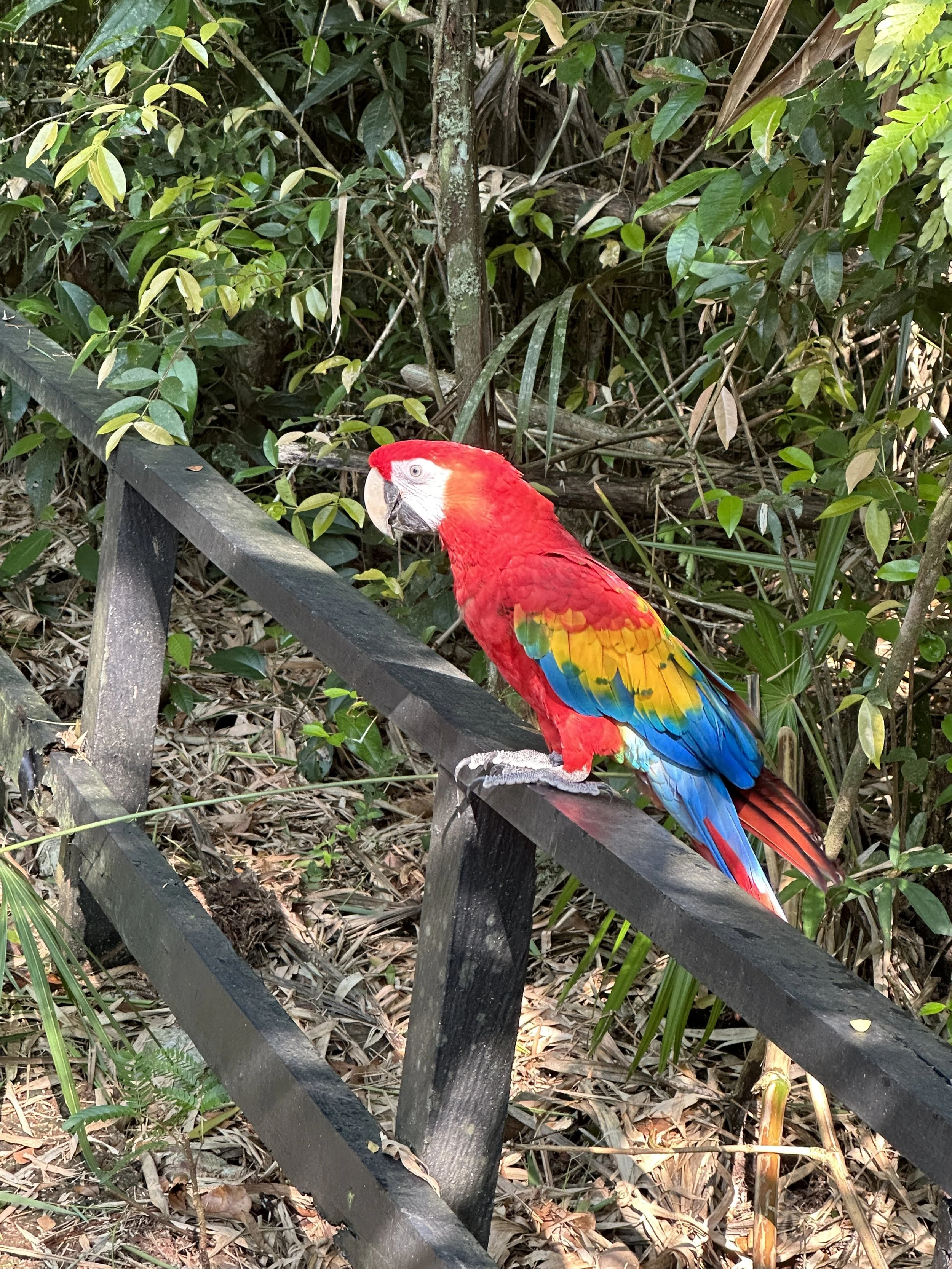
In this toolkit, we’ll go over the science of scarlet macaws, the unique conservation challenges these birds face in Belize, and how scientists are working to bring the birds back to Belize’s rainforests. We’ve included videos, reading activities, comprehension questions and more to engage students at the K-2 level.
Depending on your needs, we estimate this toolkit can provide around 30-40 minutes of classroom instruction.
Let’s start with the quick video about scarlet macaws that we think will engage your students:

What’s Included in this Toolkit?
Written content on macaws in Belize that you can use to enhance your understanding of macaws and engage your students. These include videos and photos taken at the Belize Zoo.
A brief video that includes important information about macaws from the experts at the Belize Zoo.
A 10 minute narrated video that explores the wildlife that share the Belize rainforest with jaguars. Included are talking points to ask your students about the video to ensure comprehension.
Access to a flipbook version of This Birdie Told Me. We partnered with award-winning author Ashley Moseley (and our Marketing Director!) to develop to introduce the main concepts of macaws in language easily accessible to a K-2 audience. Included are talking points to ask your students about the book to ensure comprehension.
An Ask a Scientist feature that allows you and your class to ask questions at the scientists our team and get an audio file response to play for your class!


The Amazing Scarlet Macaws
When you think “parrot,” you’re probably thinking about the scarlet macaw: a brilliant red, yellow and blue bird that looks right at home sitting on a pirate’s shoulder.
Scarlet macaws can be found from Mexico all the way down to Bolivia in South America. They’re social birds, meaning that they like to live in flocks – sometimes gathering in groups of as many as 30 birds at a time. Macaws are noisy, too: communicating in loud rasping or screeching sounds. Like many other parrots, scarlet macaws can even learn to mimic human speech – although they can usually replicate only a few words or sentences.
One of the scarlet macaw’s most recognizable features is its large and powerful beak, which helps them easily crack open fruits, nuts and seeds. They are messy eaters, often dropping much of the food they try to eat – something that’s actually beneficial for their environment. By dropping seeds and nuts as they eat, macaws help spread seeds from one place to another, keeping the rainforest healthy and biodiverse.
The beak of a scarlet macaw. Photo by Eric Weber while at the Belize Zoo
Scarlet macaws remain with the same mate for life, and every few years, lay one or two eggs. “For life” is a long time, since scarlet macaws can live for up to 50 years in the wild, and up to 70 years in captivity!
Macaws Under Threat
Scarlet macaws aren’t considered an endangered species, but in Belize, they’re at risk of disappearing locally. Habitat destruction is one threat, especially from dams. In Belize, one dam built in 2005 resulted in the flooding of an entire river valley home to scarlet macaws, which was especially devastating because it destroyed their nesting grounds.
Scarlet macaws are also under threat from the illegal pet trade. Macaw eggs and hatchlings are often taken from nests to sell in places like the United States. Because macaws only lay eggs every other year, poaching risks stealing more young macaws from their homes than can be replaced.
Because of these two threats – the illegal pet trade and habitat destruction – scarlet macaws almost disappeared from Belize. By 1989, less than 30 individual scarlet macaws were believed to exist in the entire country.
Protecting the Scarlet Macaw
But the story doesn’t end there. Due to the efforts of conservationists, including Sharon Matola, founder of the Belize Zoo, as many as 250 scarlet macaws can now be found in Belize. For example, some wildlife rangers even spend entire months camping beside scarlet macaw nests to prevent poachers from stealing macaw eggs.
Inspire EdVentures’ partners at the Belize Zoo also do their part by rescuing and care for injured or poached scarlet macaws, with those unable to return to the wild becoming “ambassadors” who teach the public about their species. Because of these efforts and others, what was once a species at risk of disappearing is now recovering.
Today, as scarlet macaw populations slowly recover, they’ve become a big source of tourism in Belize. Tourists love seeing scarlet macaws in the wild, and many companies sell tours into the jungle to get a chance to see them. When done correctly, these programs can be beneficial, by raising money for local communities while helping foreigners gain a better understanding of the bird’s conservation challenges.
At the Belize Zoo, two of the scarlet macaws, named Ranger and Pirate (Pirate only has one leg!) serve as the ambassadors for their species. Their job is to teach local people and international visitors about the dangers faced by scarlet macaws in the country, and to inspire them to protect the macaws’ future.
Meet Ranger at the Belize Zoo and learn from their expert keepers about his story!
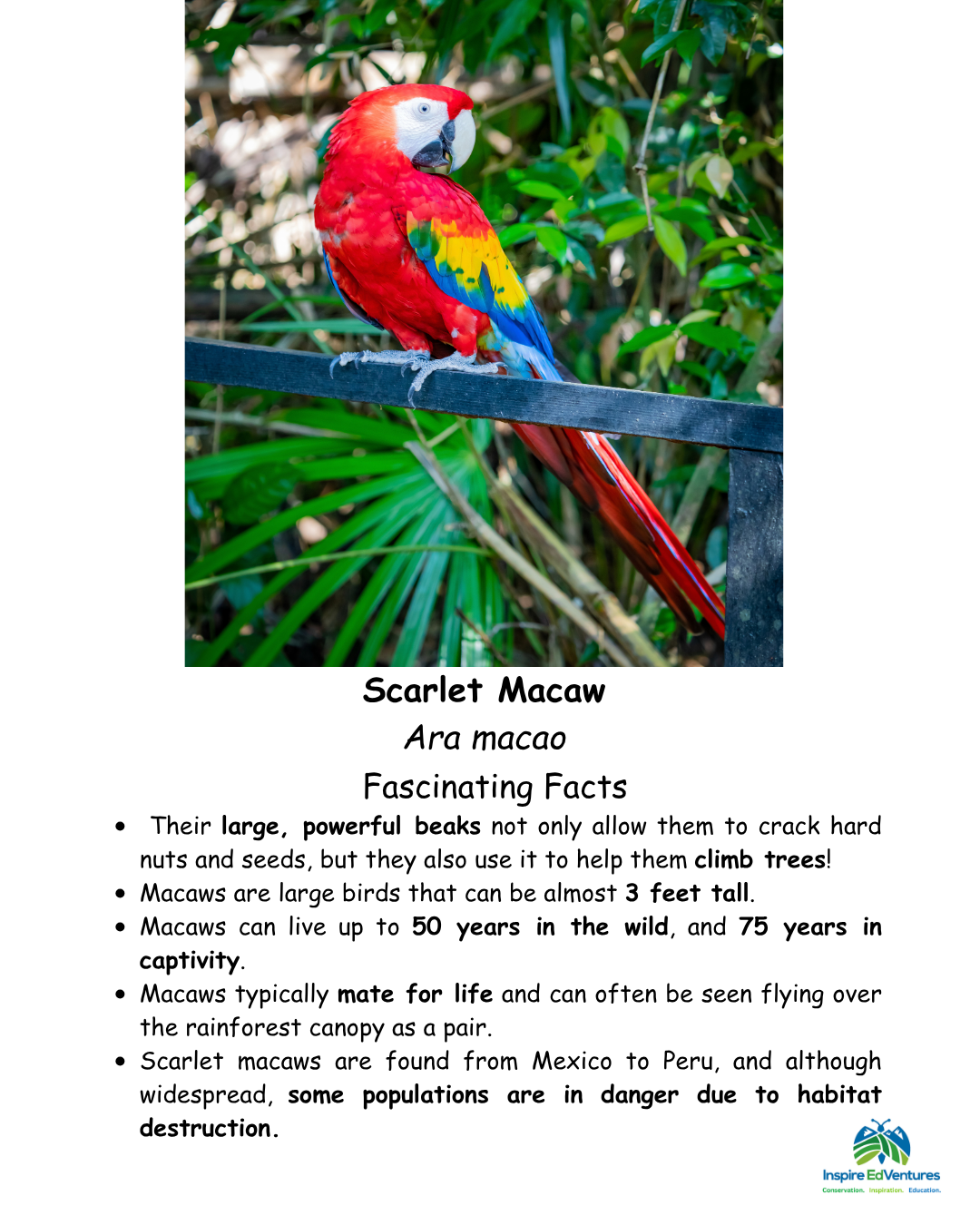
Fun Facts About Macaws!
Activities
This Birdie Told Me
An award-winning K-2 STEM book about scarlet macaws
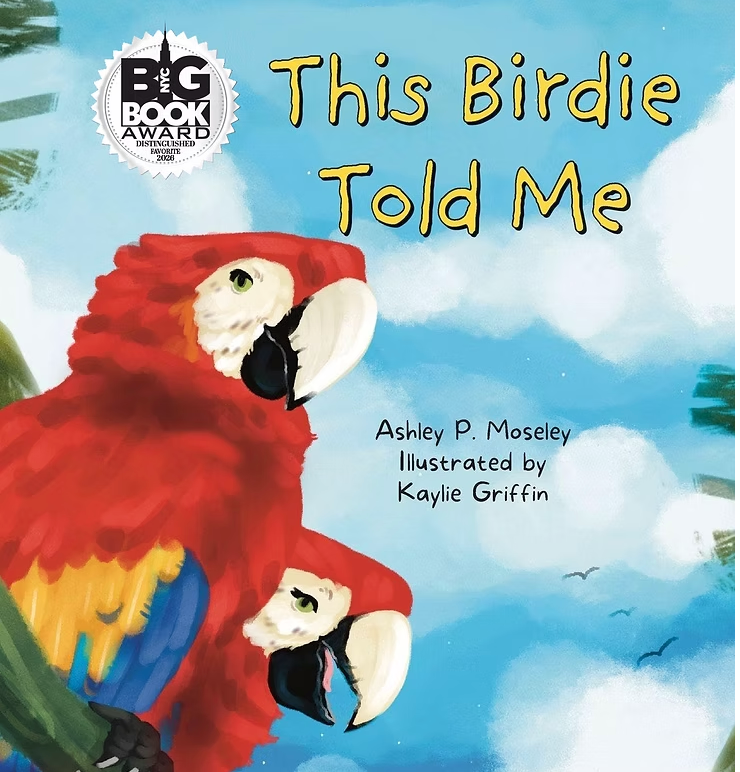
This book has recently won several awards from The NYC Big Book Award.
Talking Points and Activities for the Book
Access the digital version of the book - you will need to use the access code given when you registered for the toolkit. Didn’t register yet? No problem, click here.
Download the Talking Points Activity Guide
Download a macaw image and color your own macaw!