
Grades 3-5 Toolkit: Into the Jungle - Tapirs!
Welcome to our Into the Jungle – Tapirs Toolkit
Tapirs are one of the most fascinating animals in the rainforest. Although they may look like a cross between a pig, an elephant, and an anteater, tapirs are unlike any other mammal found in Belize. As the largest land mammal in Central America and the national animal of Belize, they play an essential role in maintaining healthy rainforest ecosystems by spreading seeds and helping new plants grow. For students, tapirs provide an excellent introduction to ecosystems, animal adaptations, and the important role wildlife plays in conservation.
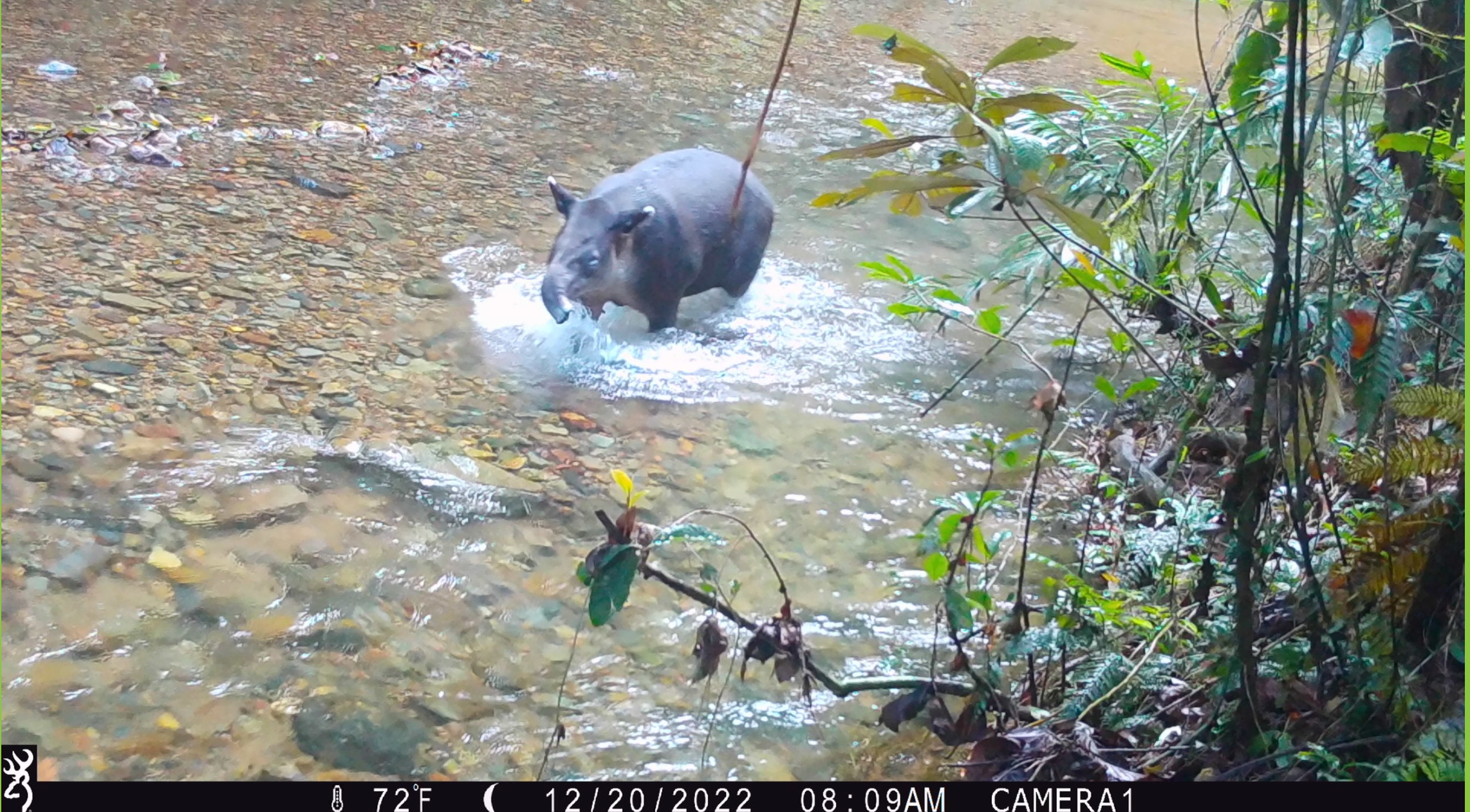
A Central American tapir captured on one of Inspire EdVentures trail cameras in Belize
In this toolkit, we make learning about tapirs fun and engaging for students in grades 3–5. Our resources clearly explain the biology, ecology, and conservation of Central American tapirs through videos, hands-on activities, and real-world examples from our friends at the Belize Zoo. Depending on how you use these resources, this toolkit can provide 30–90 minutes of classroom instruction focused on wildlife conservation, life science, and rainforest ecology.
Let's start with a quick video that we think will engage your students!
What's Covered in this Toolkit?
Written content on tapirs in Belize to enhance your lessons and engage your students. These include videos and photos from the Belize Zoo, along with images and trail camera footage collected by Inspire EdVentures during student wildlife research projects in Belize.
A 3-minute educational video featuring tapirs from the Belize Zoo that introduces students to their unique adaptations, behavior, and importance to the rainforest ecosystem.
A 10-minute narrated trail camera video exploring the wildlife that shares the Belize rainforest with tapirs. This activity includes student comprehension questions and teacher discussion prompts to reinforce learning.
A podcast episode from the Inspiring Animals series that explores tapir conservation, the challenges these remarkable mammals face, and why protecting rainforest habitats is so important.
A hands-on STEM activity that demonstrates how tapirs act as the "gardeners of the rainforest" by dispersing seeds and helping forests regenerate.
An Ask a Scientist feature that allows you and your students to submit questions to our science team and receive answers from a real scientist.
Alignment with Grade 3–5 Science Standards
North Carolina Science Standards Alignment
We can align our content to any state's science standards or individual program requirements. For more information, contact us at michael@inspire-edventures.com.
The Story Starts Here…
Moving quietly through the rivers and dense rainforests of Belize, a large, dark-colored animal steps out from beneath the trees. At first glance, it might look like a pig, a small cow or maybe an anteater. But look closer, and you'll notice one of its most unusual features—a long, flexible snout that moves almost like a tiny elephant's trunk. In addition, it has four toes on each of its front feet, and three toes on each of its hind feet. This remarkable animal is the Central American tapir, and it is the national animal of Belize.
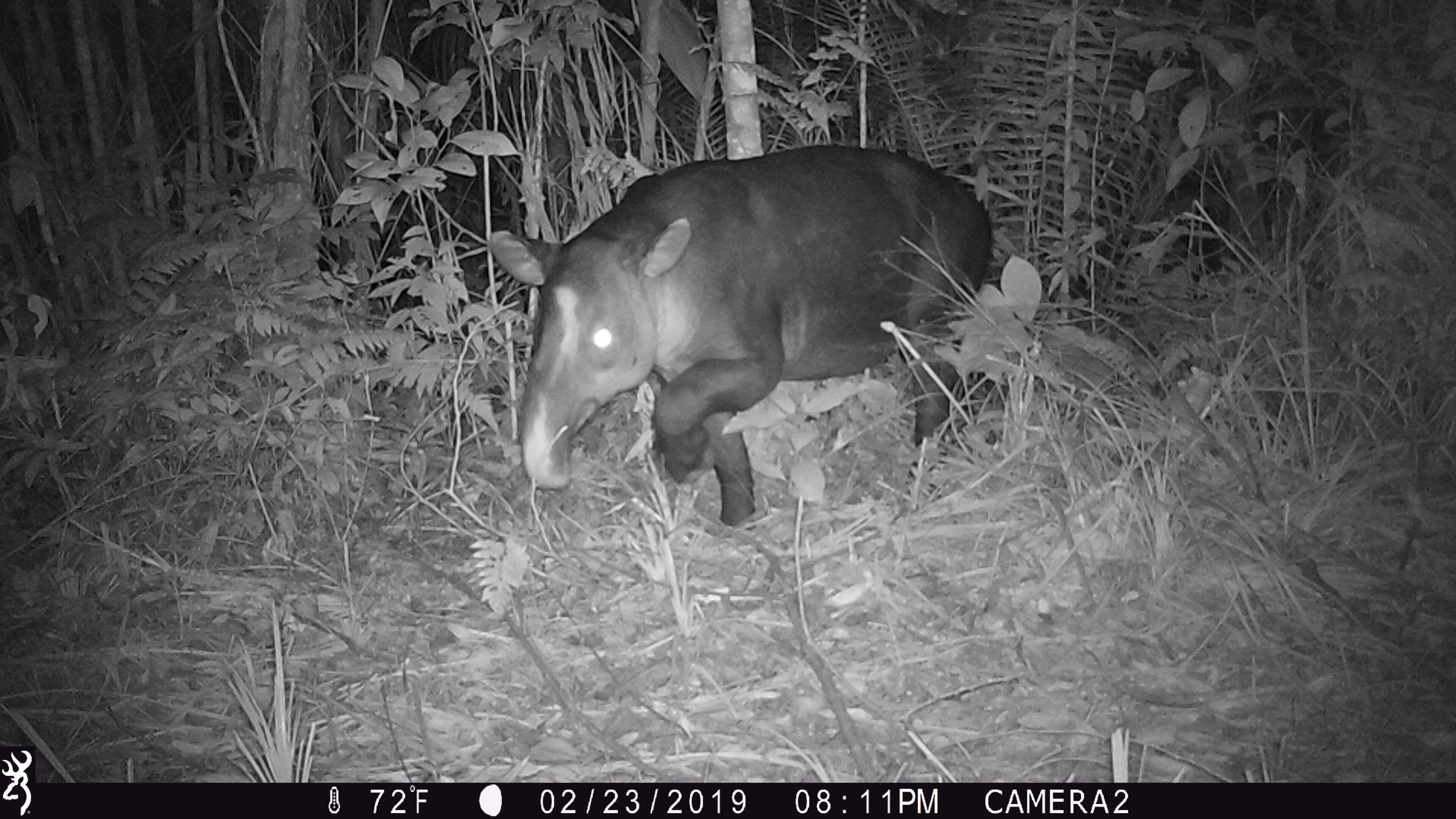
A tapir in Central Belize; Photo by Inspire EdVentures
Although tapirs are often called mountain cows in Belize, they aren't related to cows at all. Instead, they are more closely related to horses and rhinoceroses, making them one of the most unique mammals in the rainforest. Horses, rhinoceroses and tapirs are all examples of ungulates, meaning that they have hooves. Goat and deer are other examples of ungulates, although they are more distant relatives of the tapir than horses and rhinos.
Tapirs are the largest land mammals in Central America, weighing between 300 and 600 pounds and standing about four feet tall at the shoulder. Despite their size, tapirs are gentle herbivores that spend most of their time eating leaves, fruits, twigs, and other plants found throughout the rainforest. They are also excellent swimmers and often cool off in rivers, ponds, and muddy pools called wallows. Their flexible snout, which is actually an elongated part of their nose and upper lip, acts like a built-in tool, helping them grab leaves, pull fruit from branches, and even breathe while swimming underwater like a snorkel.
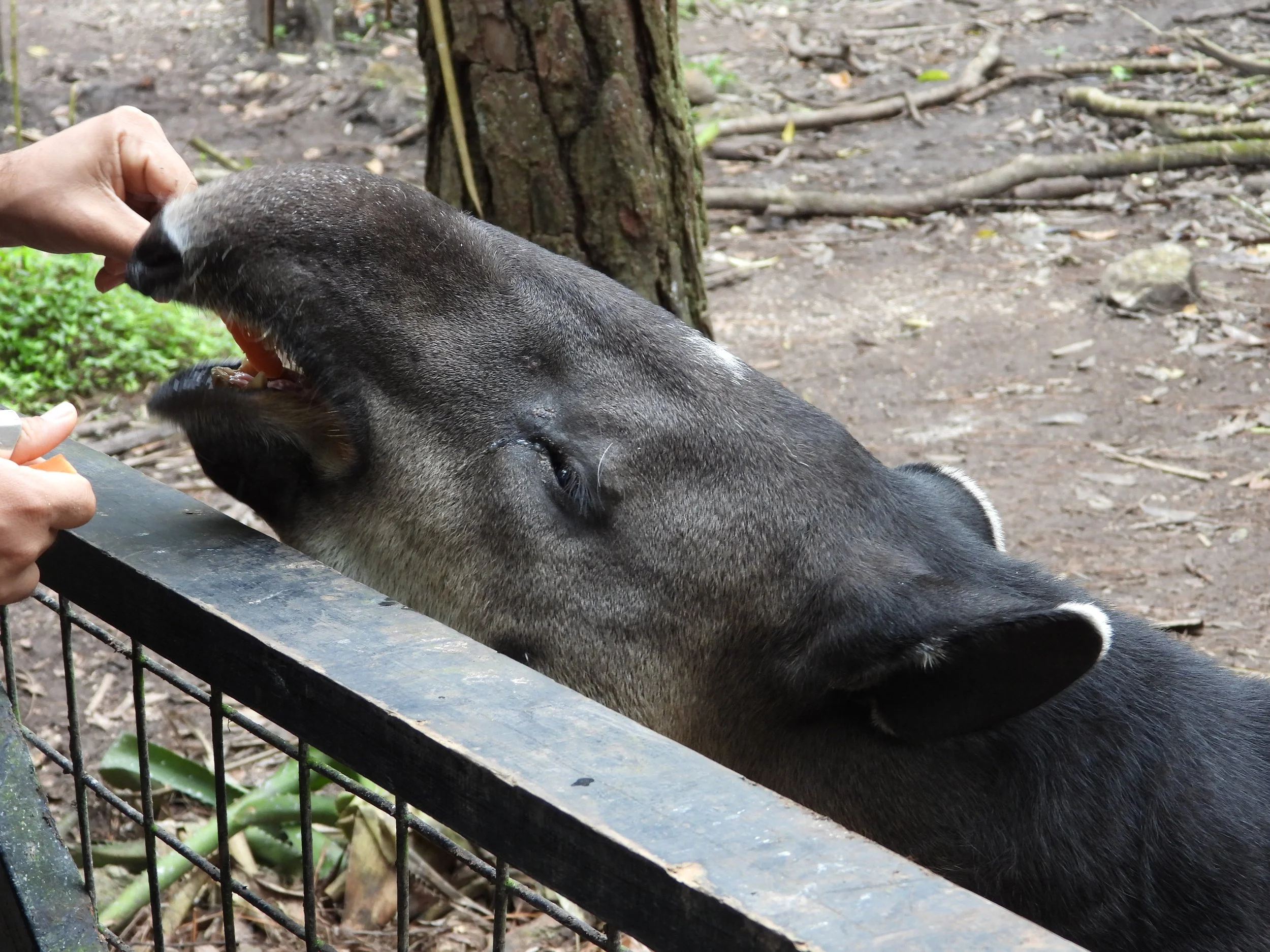
The unique “snout’ of a tapir.
Gardeners of the Rainforest
Tapirs play one of the most important roles in keeping the rainforest healthy. As they travel through the forest searching for food, they eat fruits from many different plant species. The seeds inside those fruits pass through the tapir's digestive system and are later deposited in new locations. This process, known as seed dispersal, helps new trees and plants grow throughout the rainforest.
Because tapirs spread thousands of seeds over large distances, scientists often call them the "gardeners of the rainforest." Without animals like tapirs, many tree species would struggle to spread, making it harder for damaged forests to recover. After events such as forest fires, hurricanes, or deforestation, seed-dispersing animals help new plants become established and begin rebuilding the ecosystem.
This relationship demonstrates how connected the animals and the rainforest ecosystem truly are. Protecting the rainforest isn't just about saving trees—it also means protecting the animals that help forests survive and grow. When tapir populations decline, the entire ecosystem can be affected.
Unfortunately, tapirs face many of the same challenges as other rainforest wildlife. As forests are cleared for roads, farms, and development, tapirs lose important habitat and are forced into smaller, isolated areas. Because they reproduce slowly—usually giving birth to only one calf every two years—it can take a long time for tapir populations to recover. Protecting rainforest habitat and creating wildlife corridors allows tapirs to move safely through the forest while helping maintain healthy ecosystems for countless other species.
Tapirs at the Belize Zoo
One of Belize's most famous tapirs was named April. She was rescued as an orphaned calf and raised by Sharon Matola, the founder of the Belize Zoo. For nearly 30 years, April became an ambassador for wildlife conservation, introducing thousands of visitors to Belize's national animal and teaching them why tapirs deserve protection. She became so beloved that April 27 is celebrated each year as National Tapir Day in Belize.
A video of Sparks at the Belize Zoo
Today, April's legacy continues through another tapir named Sparks. Sparks is the son of another tapir named Fuego, whose name means "fire" in Spanish because he was rescued after a forest fire destroyed his habitat. Sparks was born at the Zoo and is an ambassador for his species. He and his father work together to inspire visitors to learn about wildlife conservation and the importance of protecting Belize's incredible rainforest.
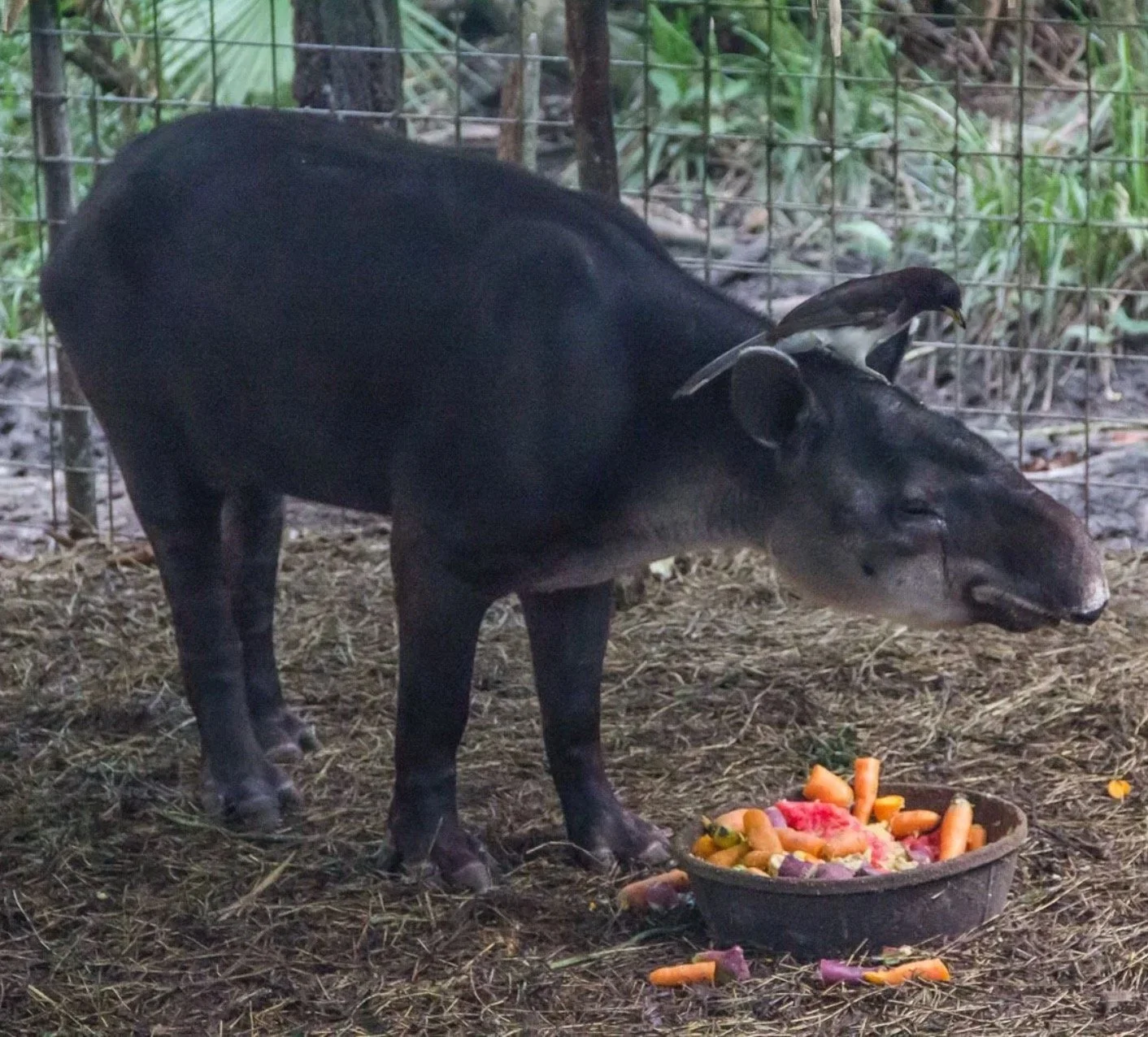
Sparks, a Tapir at the Belize Zoo
Fun Science Facts About Tapirs
Tapirs are mostly nocturnal, meaning they are most active during the evening and nighttime hours. During the hottest parts of the day, they often rest in shaded areas or cool off in shallow pools of water and mud called wallowing holes. These muddy pools help regulate their body temperature and can also protect them from biting insects.
A tapir's most recognizable feature is its flexible snout, which acts like a short trunk. This specialized nose helps tapirs grab leaves, pull fruit from branches, smell food, and even breathe while swimming underwater. Although it looks similar to an elephant's trunk, it evolved independently and is an excellent example of an adaptation that helps the tapir survive in its rainforest habitat.
There are four species of tapirs found around the world. The species that lives in Belize is called Central American tapir (also called theBaird's Tapir), but other tapir species can be found throughout South America and even in the rainforests of Southeast Asia. Together, these species help maintain healthy forest ecosystems by spreading seeds over large areas.
Tapirs are the largest land mammals in Central America, with adults weighing between 300 and 600 pounds. Despite their impressive size, they are gentle herbivores that feed primarily on leaves, fruits, twigs, and aquatic plants.
Baby tapirs look very different from adults. They are born with brown coats covered in white stripes and spots, which provide excellent camouflage by helping them blend into the dappled sunlight on the rainforest floor. They are affectionately referred to as “baby watermelons” at this age because of their markings. As they grow older, these markings gradually disappear, and their coats become the dark brown or black color seen in adults.
Scientists often refer to tapirs as the "gardeners of the rainforest" because they are among the most important seed dispersers in tropical forests. As tapirs travel through the rainforest searching for food, they spread seeds in their droppings, allowing new plants and trees to grow. Without animals like tapirs, many rainforest plants would have difficulty reproducing and expanding into new areas.
Although tapirs have few natural predators as adults, young tapirs may be hunted by jaguars or crocodiles. Their excellent sense of smell and hearing, along with their ability to quickly escape into rivers and streams, help them avoid danger.
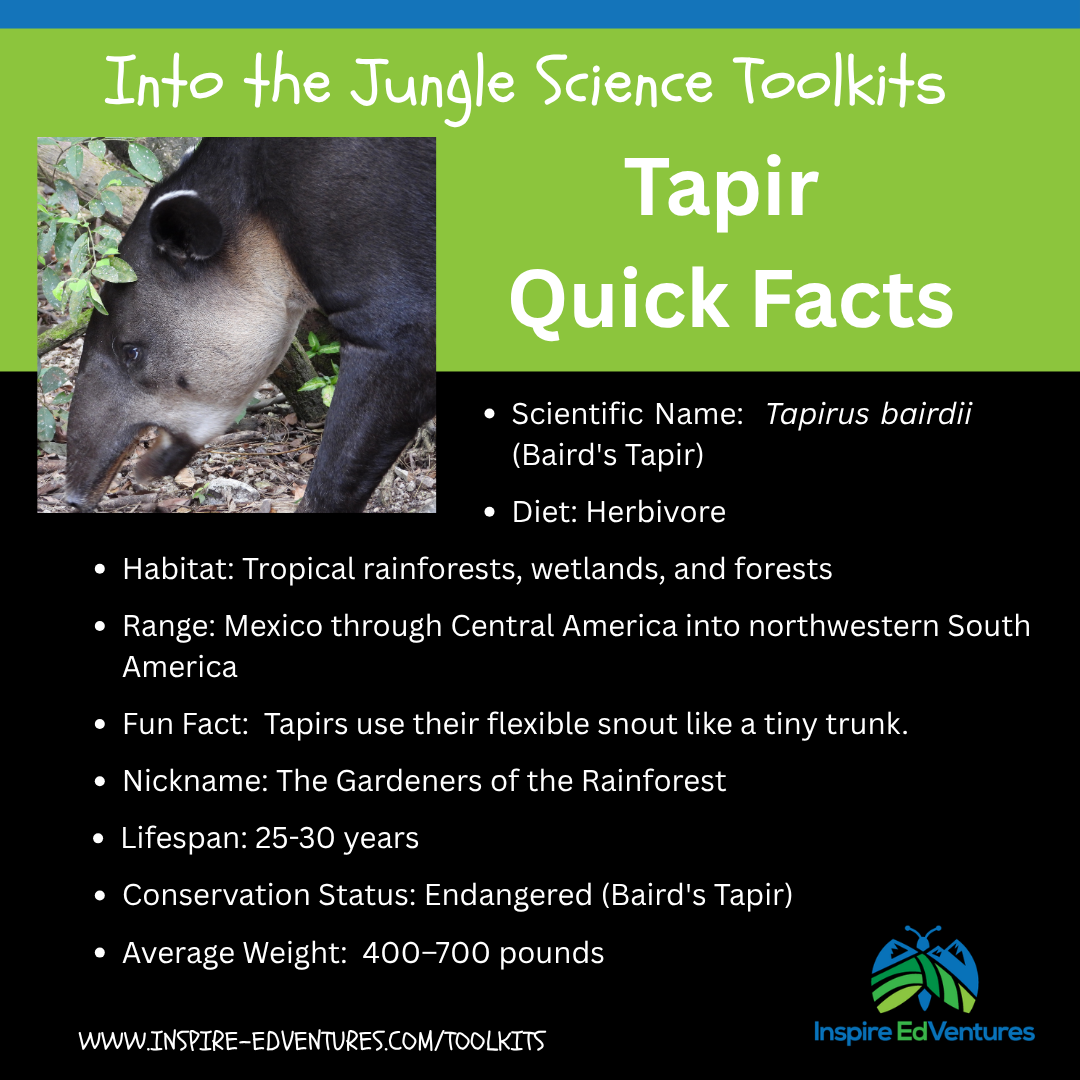
Feel free to download a copy for your classroom!
Story Download & Vocabulary Worksheets
Download the reading above to allow your students to read the story offline. Our vocabulary worksheets are designed to help with vocabulary-building exercises using the boldfaced words in the story above.
PDF version of the story. Download and print for individual student work
Learn More About Tapirs
Listen to our Inspiring Animals – Tapirs podcast, where you'll learn more about the Central American tapir, rainforest conservation, and the important role these gentle giants play in maintaining healthy ecosystems.
Trail Camera Video Activity
Tapirs share Belize's rainforests with hundreds of fascinating animals, from colorful birds and monkeys to deer, peccaries, crocodiles, and even jaguars. In this 10-minute narrated trail camera video, you'll discover some of the amazing wildlife captured by Inspire EdVentures' research cameras before taking a closer look at tapirs in their natural habitat.
The video includes discussion questions and student activities designed to reinforce key concepts about rainforest ecosystems, animal adaptations, and wildlife conservation.
Student Activity for the Video
Download the Student Handout
Seed Dispersal STEM Activity - Become a Rainforest Gardener!
Tapirs are known as the "gardeners of the rainforest" because they help spread seeds throughout the forest. In this hands-on STEM activity, students will model how tapirs disperse seeds and explore why this process is essential for healthy rainforest ecosystems.
Fun Fact! This exercise was prepared by the staff of the Belize Zoo for use in their outreach programs for local schools. So, tell your students that this exercise is being done in Belize! We have adapted the Zoo’s version with their permission.

The ingredients needed to make tapir poo - instructional video coming soon!
Instructional Materials
Teacher Handouts & References
Tapir Diet Handout (to be laminated)
“How To” Video - Coming Soon!
The article What Can Tapir Poop Teach Us About Healthy Forests? is a great way to familiarize yourself with the relationship between tapirs and the rainforests.
Student Handout (Grades 3-5)
Teacher Resources
Science of Tapirs: Our in-depth article explores the biology, adaptations, ecology, and conservation of Baird's tapirs. It's an excellent resource for answering student questions and extending classroom discussions.
World Tapir Day Video: Created to celebrate World Tapir Day, this educational video provides additional information about tapirs, their habitat, and conservation efforts throughout Central America.
Additional IE Resources on Tapirs: A downloadable collection of Inspire EdVentures' tapir videos, articles, classroom resources, and activities.
What Can Tapir Poop Teach Us About Healthy Forests? A great article by Frontiers that teaches students about the connection between large mammals and the rainforest ecosystem.
Ask a Scientist: Have a question about tapirs or rainforest wildlife? Our science team is happy to help! Submit your classroom questions and receive answers from a real scientist.
Premium Content
The items below are add-ons that may be purchased for the Tapir Grade 3-5 Toolkit.
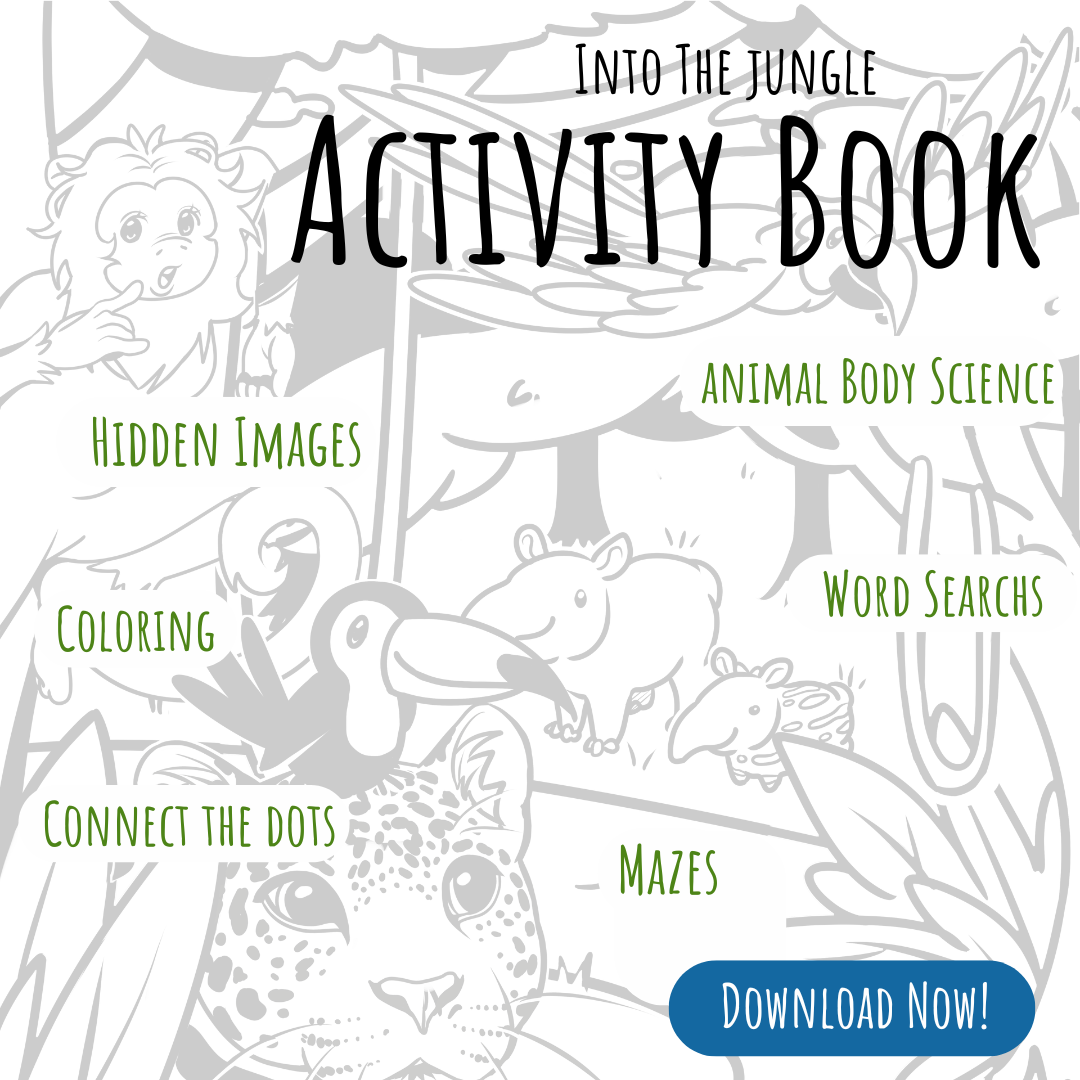
Looking for more activities for our Nacho House Cat, Why Did the Tapir Cross the Street?, and This Birdie Told Me series of STEM children’s books? This activity book is loaded with an additional 28 pages of activities to engage young learners. Included are coloring pages, word searches, mazes (and more!), featuring the animals of our books. Additional links are provided to our Amazing Animals content that allows you to bring videos and podcasts into your home or classroom.
This digital download is provided as a pdf file. Pages will print in portrait configuration on standard paper. The front and back pages are in color, the remainder are black and white.
After purchasing you will receive a download link on the confirmation screen as well as in your confirmation email.
You may print copies of these pages for your home or classroom use. Images and pages may be not loaded to other websites without the permission of Inspire EdVentures.
More Tool Kits!
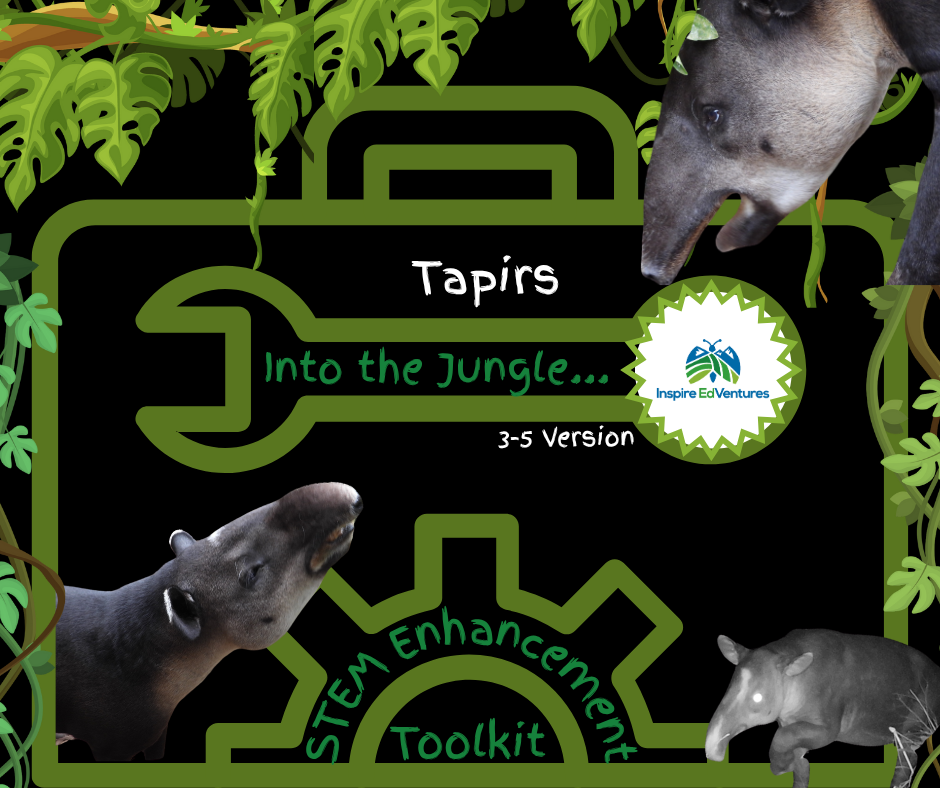



Science consultant: Dr. Michael Windelspecht ; michael@inspire-edventures.com
Need assistance? Email us at experiences@inspire-edventures.com or call us at 828.372.2882
Version 1.1 ; July 2026