
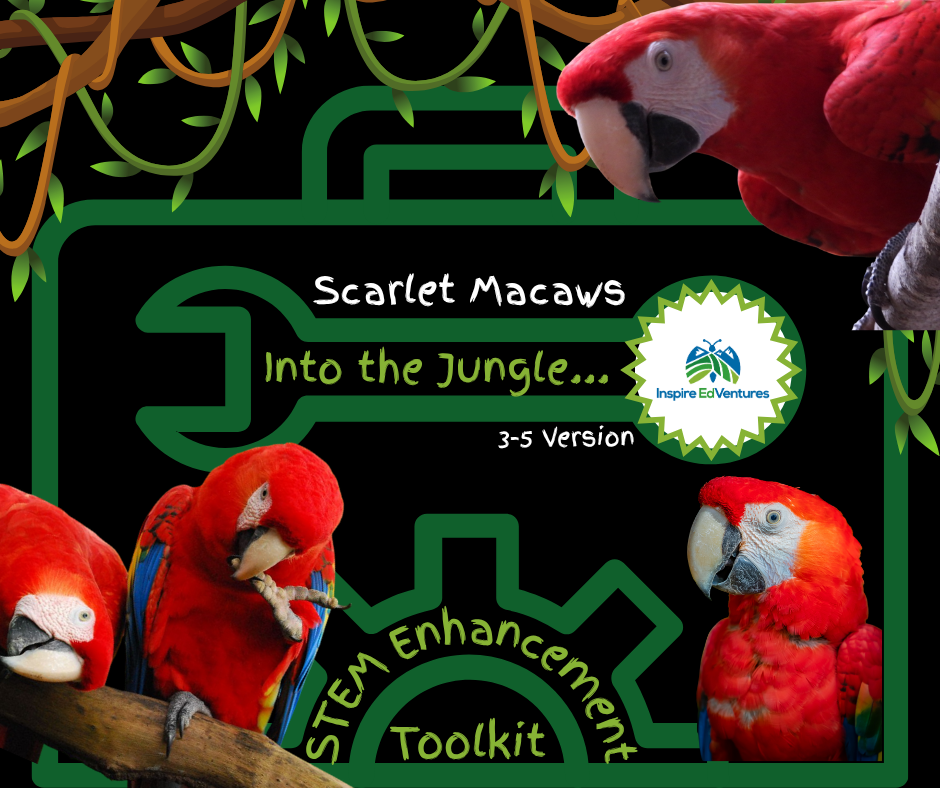
Welcome to our Into the Jungle ToolKit - Featuring Scarlet Macaws!
Look to the very tops of the rainforest in Belize, and you might just see a flash of red high up in the trees. This is the scarlet macaw, one of the most beautiful birds in the world. These vibrant parrots are icons of the tropics, and for students especially recognizable and exciting for their common association with pirates. Because they’re so iconic, scarlet macaws can serve as an excellent way to explain big issues like conservation, poaching, and wildlife rehabilitation in ways that are both engaging and understandable for students in grades 3-5.
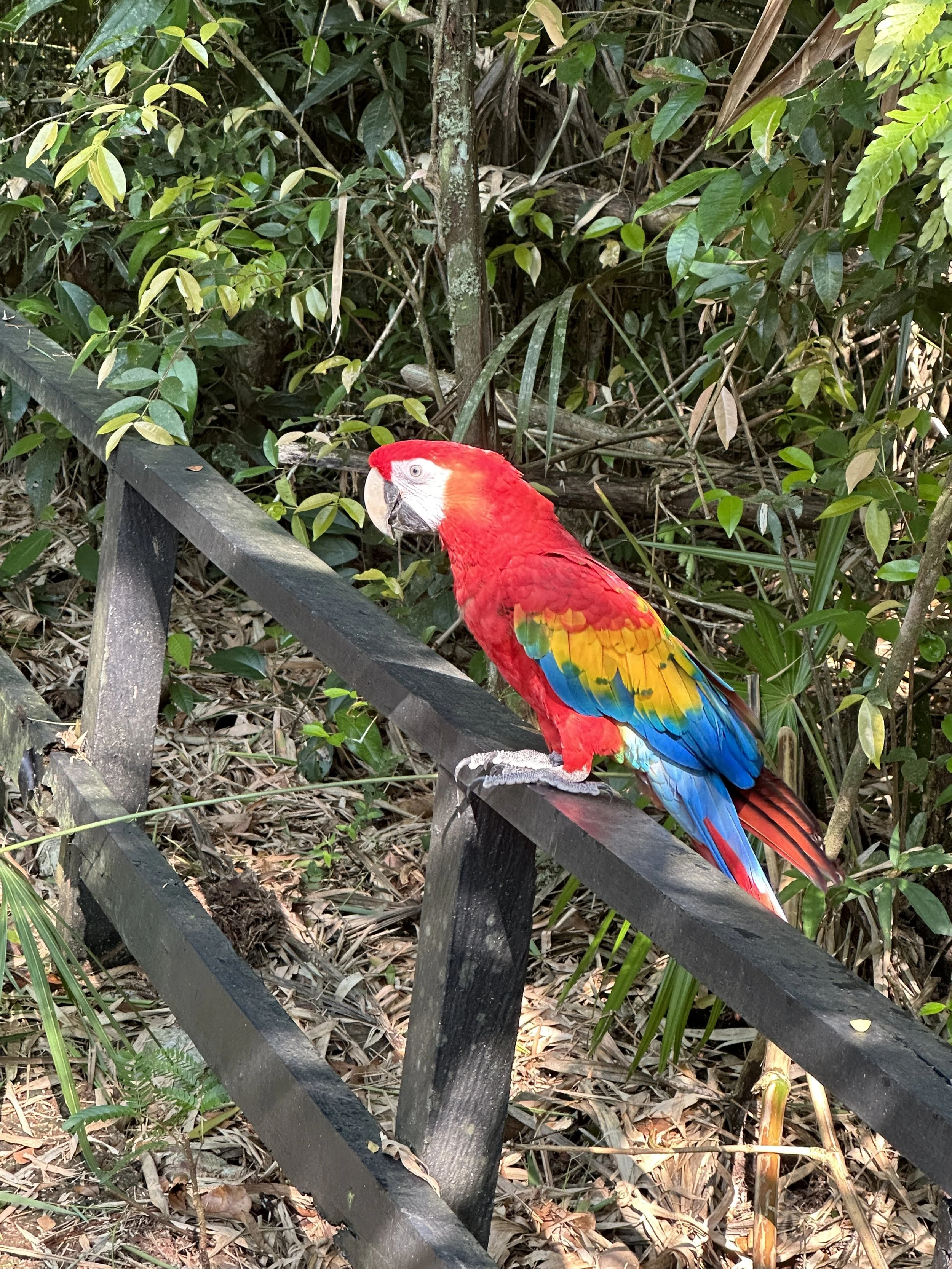
In this toolkit, we’ll go over the science of scarlet macaws, the unique conservation challenges these birds face in Belize, and how scientists are working to bring the birds back to Belize’s rainforests. We’ve included videos, reading activities, comprehension questions and more to engage students and learners of any age.
Depending on your needs, we estimate this toolkit can provide around 40-60 minutes of classroom instruction.
Let’s start with the quick video about scarlet macaws that we think will engage your students:

What’s Included in this Toolkit?
Written content on macaws in Belize that you can use to enhance your understanding of macaws and engage your students. These include videos and photos taken at the Belize Zoo.
A brief video that includes important information about macaws from the experts at the Belize Zoo.
A 10 minute narrated video that explores the wildlife that share the Belize rainforest with jaguars. Included are talking points to ask your students about the video to ensure comprehension.
A podcast episode from the Inspiring Animals series that explores tapir conservation, the challenges these remarkable mammals face, and why protecting rainforest habitats is so important.
A hands-on STEM activity that demonstrates how tapirs act as the "gardeners of the rainforest" by dispersing seeds and helping forests regenerate.
An Ask a Scientist feature that allows you and your class to ask questions at the scientists our team and get an audio file response to play for your class!


Alignment with Grade 3–5 Science Standards
North Carolina Science Standards Alignment
We can align our content to any state's science standards or individual program requirements. For more information, contact us at michael@inspire-edventures.com.
The Amazing Scarlet Macaws
When you think “parrot,” you’re probably thinking about the scarlet macaw: a brilliant red, yellow and blue bird that looks right at home sitting on a pirate’s shoulder.
Scarlet macaws can be found from Mexico all the way down to Bolivia in South America. They’re social birds, meaning that they like to live in flocks – sometimes gathering in groups of as many as 30 birds at a time. Macaws are noisy, too: communicating in loud rasping or screeching sounds. Like many other parrots, scarlet macaws can even learn to mimic human speech – although they can usually replicate only a few words or sentences.
One of the scarlet macaw’s most recognizable features is its large and powerful beak, which helps them easily crack open fruits, nuts and seeds. They are primarily herbivores, but are technically omnivores since they have been known to eat small animals. They are also messy eaters, often dropping much of the food they try to eat – something that’s actually beneficial for their environment. By dropping seeds and nuts as they eat, macaws help spread seeds from one place to another, keeping the rainforest healthy and thus increasing biodiversity.
The beak of a scarlet macaw. Photo by Eric Weber while at the Belize Zoo
Scarlet macaws are monogamous and remain with the same mate for life, and every few years, lay one or two eggs. “For life” is a long time, since scarlet macaws can live for up to 50 years in the wild, and up to 70 years in captivity!
Macaws Under Threat
Scarlet macaws aren’t considered an endangered species, but in Belize, they’re at risk of disappearing locally. Habitat destruction is one threat, especially from dams. In Belize, one dam built in 2005 resulted in the flooding of an entire river valley home to scarlet macaws, which was especially devastating because it destroyed their nesting grounds.
Scarlet macaws are also under threat from the illegal pet trade and poaching. Macaw eggs and hatchlings are often taken from nests to sell in places like the United States. Because macaws only lay eggs every other year, poaching risks stealing more young macaws from their homes than can be replaced.
Because of these two threats – the illegal pet trade and habitat destruction – scarlet macaws almost disappeared from Belize. By 1989, less than 30 individual scarlet macaws were believed to exist in the entire country.
Protecting the Scarlet Macaw
But the story doesn’t end there. Due to the efforts of conservationists, including Sharon Matola, founder of the Belize Zoo, as many as 250 scarlet macaws can now be found in Belize. For example, some wildlife rangers even spend entire months camping beside scarlet macaw nests to prevent poachers from stealing macaw eggs.
Inspire EdVentures’ partners at the Belize Zoo also do their part by rescuing and care for injured or poached scarlet macaws, with those unable to return to the wild becoming “ambassadors” who teach the public about their species. Because of these efforts and others, what was once a species at risk of disappearing is now recovering.
Today, as scarlet macaw populations slowly recover, they’ve become a big source of tourism in Belize. Tourists love seeing scarlet macaws in the wild, and many companies sell tours into the jungle to get a chance to see them. When done correctly, these programs can be beneficial, by raising money for local communities while helping foreigners gain a better understanding of the bird’s conservation challenges.
At the Belize Zoo, two of the scarlet macaws, named Ranger and Pirate (Pirate only has one leg!) serve as the ambassadors for their species. Their job is to teach local people and international visitors about the dangers faced by scarlet macaws in the country, and to inspire them to protect the macaws’ future.
Meet Ranger at the Belize Zoo and learn from their expert keepers about his story!
Story Download & Vocabulary Worksheets (Coming Soon!)
Download the reading above to allow your students to read the story offline. Our vocabulary worksheets are designed to help with vocabulary-building exercises using the boldfaced words in the story above.
PDF version of the story. Download and print for individual student work.
Vocabulary Words and Definitions
Macaw Vocabulary Words Activity
Writing Using Macaw Vocabulary Words
Fun Facts About Macaws!
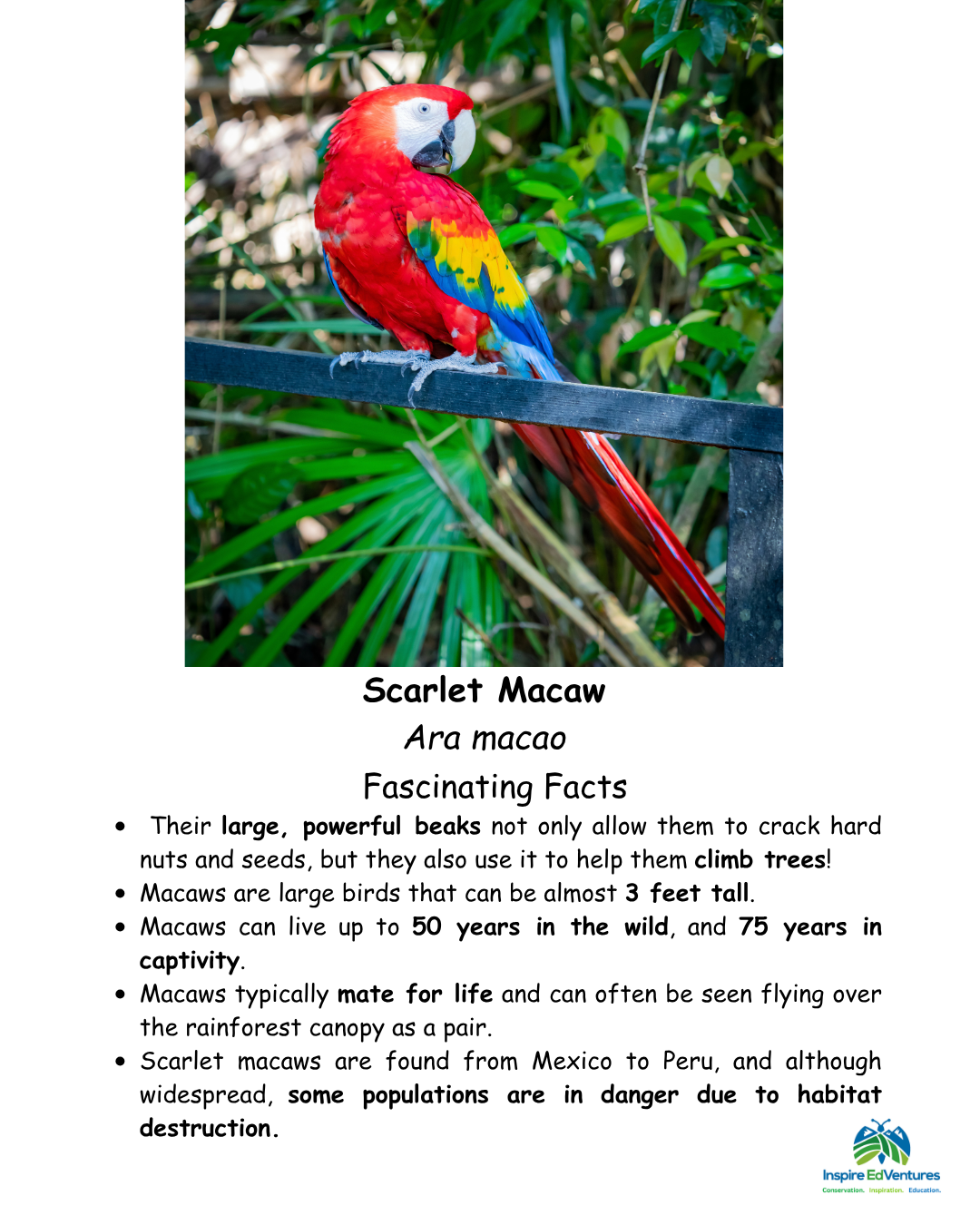
Learn More About Scarlet Macaws
Listen to our Inspiring Animals – Scarlet Macaws podcast, where you'll learn more about these amazing birds, rainforest conservation, and the importance of these animals in the protection of the rainforests of Belize.
Trail Camera Video Activity
Jaguars live beside hundreds of other animals that also call the rainforest home, from birds to large mammals and even other big cats! In this video, we go through some of the wildlife we’ve captured on our trail cameras in Belize, then look at some of the jaguars we’ve caught on camera. The video is approximately 10 minutes long, and we’ve included some talking point questions for your students to help them get the most out of the experience:
Talking Points and Activities for the Video
Download the Talking Points guide.
Download the student worksheet.
The Beauty of a Macaw - A Hands On STEAM Activity
Young learners love parrots and this art-based STEM activity allows them to build their own scarlet macaw from simple materials. Depending on the grade level, this activity takes about 30-40 minutes.

Building a scarlet macaw for a recent STEM event at Barnes & Noble
Teacher Resources for this Activity:
Materials Needed and Instructions. Download the pdf.
Instructional Video:
Teacher Resources
Ask A Scientist. Our new feature that lets teachers, and their students, ask a real scientist their questions on jaguars and wildlife conservation.
Activity Books, Book Copies & More
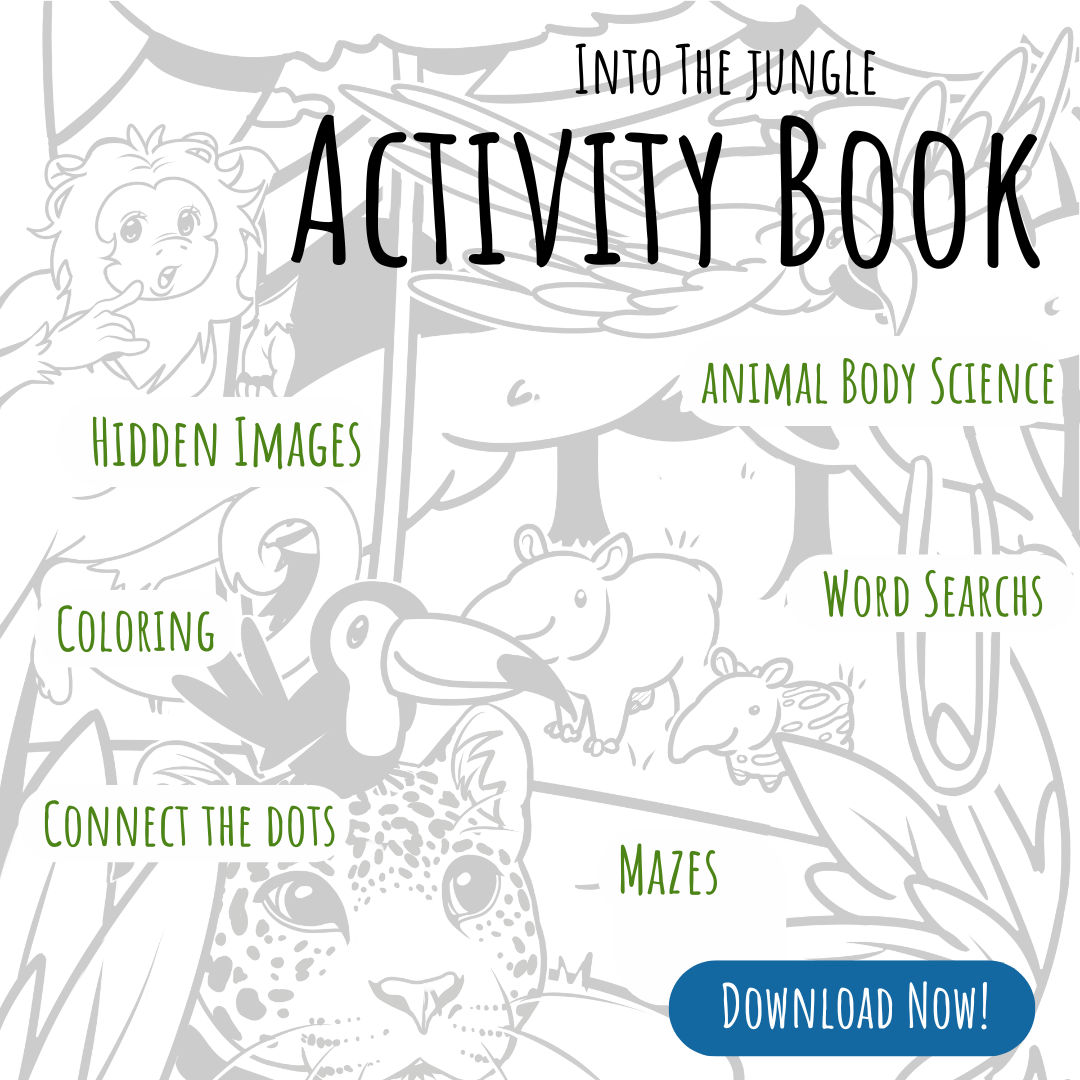
Looking for more activities for our Nacho House Cat, Why Did the Tapir Cross the Street?, and This Birdie Told Me series of STEM children’s books? This activity book is loaded with an additional 28 pages of activities to engage young learners. Included are coloring pages, word searches, mazes (and more!), featuring the animals of our books. Additional links are provided to our Amazing Animals content that allows you to bring videos and podcasts into your home or classroom.
This digital download is provided as a pdf file. Pages will print in portrait configuration on standard paper. The front and back pages are in color, the remainder are black and white.
After purchasing you will receive a download link on the confirmation screen as well as in your confirmation email.
You may print copies of these pages for your home or classroom use. Images and pages may be not loaded to other websites without the permission of Inspire EdVentures.
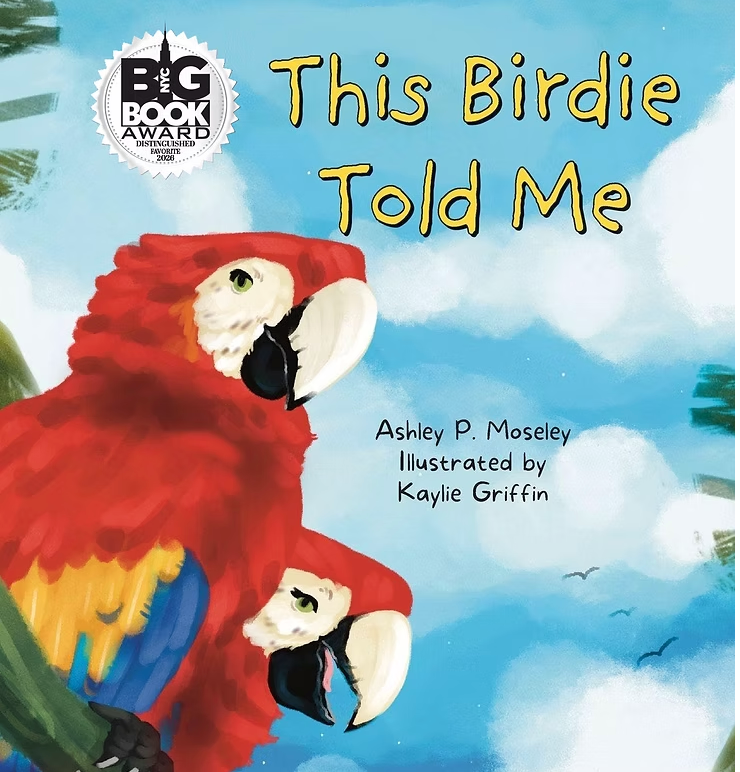
A curious little birdie explores the world around him, comparing his feathers, calls, and habits to other animals — even humans — as he searches for who he truly is. Along the way, he learns about imprinting, adaptation, and belonging, ultimately discovering that he’s a macaw! This Birdie Told Me is a beautifully illustrated celebration of self-discovery and the resilience of wildlife in changing environments.
Softcover picture book, 32 pages
Ideal for Ages 4–8
Perfect for nature lovers, teachers, and families

Science consultant: Dr. Michael Windelspecht michael@inspire-edventures.com
Need assistance? Email us at experiences@inspire-edventures.com
Version 1.0 November 2026